Eugene O'Neill - Biography and Works
Eugene O'Neill (1888- 1953) was born in New York into an Irish-Catholic theatrical family. His early life was restless: his father, who was an actor, spent most of his career touring in the lead role of the popular melodrama The Count of Monte Cristo.
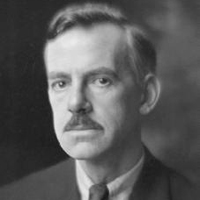
Eugene O'Neill (1888- 1953)
In 1895 O'Neill was enrolled in the St. Aloysius Academy for Boys, and transferred in 1900 to the DeLa Salle Institute in Manhattan. During these years his mother's addiction to morphine left profound emotional scars on the growing O'Neill. In 1902 Ella O'Neill tried to commit suicide.
After renouncing Catholicism, O'Neill entered in 1902 the Betts Academy in Stamford, a non-sectarian preparatory school. Six years later he entered Princeton University, but left it after a year. During this period he spent most of the time in New York waterfront bars and brothels. In 1909 he married Kathleen Jenkins. The marriage ended two years later. They had one son, who has to commit suicide at the age of forty.
In the late 1910s O'Neill dramas begun to gain recognition in New York. Between the years 1918 and 1924 he wrote among others Anna Christie, The First Man, The Hairy Ape, The Fountain, and Welded. O'Neill included unpleasingly formidable subjects in his plays. Those unappealing subjects of his plays were shocking to the conventional theatre goers. O'Neill provided the soul's interior to those American audiences who came to his theatrical world. For example, the disappointment and painful surroundings of Anna Christie and the brutality of the lower-class and stoker in Hairy Ape were totally alien themes to the traditional theatre goers of O'Neill's time. Upon the whole O'Neill's characters are haunted by family agonies, affections never given, ambitions never realized, pains never assuaged.
In 1918 he married the writer Agnes Boulton; they had two children. O'Neill's father died in 1921 from cancer, next year he lost his mother, and twelve months after that his brother James died from a stroke.
The Pulitzer winning Beyond the Horizon (1920) was O'Neill's first important play. The story depicts two brothers, Andrew, the elder a practical realist, and the younger, Robert, a poetic idealist. Robert is incapable of managing the family farm. When Andrew returns from a long voyage, successful and wealthy, he finds Robert dying of tuberculosis. On his deathbed, Robert still dreams of freedom beyond the horizon.
In 1935 O'Neill began work on a cycle of eleven plays, with the theme of the turmoil of American materialism. The cycle was never completed - only two plays have survived. On his final productive period O'Neill wrote Long Day's Journey into Night, an agonized portrait of his own family, the Tyrones in the play. Again the action takes place in one room. Mary Tyrone returns to her dope addiction: "None of us can help the things life has done to us" says Mary. Edmund, based on the author himself, is stricken with tuberculosis. The play was awarded the Pulitzer Prize in 1957. Hughie (1959) was a story about a small time gambler, and A Moon for the Misbegotten (1952) continued O'Neill's family history of the Tyrones.
The Iceman Cometh is perhaps the finest of O'Neill's tragedies. The story is set in a dockside bar on the lower west side of New York City. It concerns a group of drunken derelicts who spend their time in the back room of the Henry Hope's saloon where they discuss their hopeless lives.
Eugene O'Neill, an American dramatist, who is internationally reputed in the field of drama, also got the noble prize in 1936, on the strength of the bulk of his experimental plays. He was influenced by Henrik Ibsen, August Strindberg and Maurice Maeterlinck. He is remembered for realist, naturalist and expressionist drama. Moreover, the credit goes to Eugene O’Neill for his realist and naturalistic play. Before O’Neill in American theater, there were melodrama which were sentimental and having the sense of excitement.
But when O'Neill came to the philosophical subject matter, he became out of reach from the audience, because he got the subject matter of ancient Greek time and mix it with Freudian psychoanalysis. For example Desire Under the Elms is completely realistic drama set in 19th century New England (America). Its theme is sexual desire and the desire of the land. O’Neill’s Iceman Cometh is very much philosophical and gloomy play that was staged on Broadway in 1946. It was not much liked by the audience. It became only popular in off Broadway in the year 1956. Another finest play of O'Neill is Long Day’s Journey into Night (1956) is considered by many critics to be a triumph of realistic drama and O’Neill’s finest play. It is about human responsibility and love-hate within a family.
More mature works of Eugene O'Neill are characterized by heavy experiments. His famous expressionist plays like Strange Interlude (1928) and, Dynamo (1929) belong to the category of expressionistic dramaturgy. O'Neill's mature voice in drama is the product of his wide experiences of travelling and his sustained apprenticeship to the then theatrical personnel. During his lifetime his plays did not become successful because the frightening dark vision in his plays offended those spectators who were accustomed to the comfortable and pleasing world of a light comedy and sentimental play. O'Neill's posthumous success is incredibly gigantic.
O'Neill's dramas possess remarkable abilities and power. But the traditional audience of his failed to appreciate the experimental diversity and chilling thematic grandeur of his plays. Compelled by the tragic magnificence of his plays, the conventional American theatre goers accept his plays with a shocked alertness.
O'Neill's early work is marked by a variety of experiments with theatrical effects and moods. Critics have traced the primary influences of Greek drama in Desire under the Elms (1927) and Mourning Becomes Electra (1931).