Biography of Ray Young Bear - Bachelorandmaster
Ray Young Bear (born in 1950) is an American and Indian poet and novelist. He was born and raised on the Tama Indian Reservation in Iowa, in the Mesquaki tribe, where his grandmother instructed him in the stories and traditions of his people. He started his writing career after he attended his college in the 1960s.
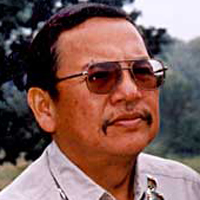
Ray Young Bear
He cofounded the Woodland Song and Dance Troupe of Arts Midwest with his wife Stella Young Bear and became an instructor of Native American literature at the University of Iowa. His principal theme is the contemporary American Indian’s search for Identity. One of the best known contemporary Native American writers, Young Bear is highly regarded for verse and prose in which he explores the conflicts arising between his Mesquakie heritage and his identity as a writer. Noting his attempts to recreate the Native American oral tradition, reviewers have praised Young Bear's emphasis on dreams, visions, and traditional Mesquakie songs in his poems.
While Young Bear's principle theme is the contemporary Indian's search for identity, he deliberately addresses both Indian and non-Indian readers by writing on two levels - one allows the non-Indian reader to appreciate the imagery and traditions of the Mesquakie people without necessarily understanding their sacred tribal significance; the other level speaks to the Indian reader who recognizes the underlying meaning and can thus identify with Young Bear's thematic project. Young Bear is also one of the few tribal-affiliated writers who speaks and writes in his native language.
His major works are Waiting to be Fed (1975), Winter of the Salamander (1980), The Invisible Musician (1990), and Black Eagle Child (1992). Unlike some other American Indian writers, Young Bear does not consider himself part of the “contemporary American Poetry scene”; he prefers the label “American Indian poet.” In Winter of the Salamander Young Bear utilizes various Indian songs, myths, and stories to address the plight of the Native American in contemporary American society. For example, in the poem, "i can still picture the caribou," Young Bear examines how Indians and whites have forgotten their origins, thus rendering meaningless the celebration of their ancient festivals and rites. The poetry of The Invisible Musician (1990) focuses on the present cultural, ethnic, artistic, and racial "invisibility" of Native Americans in American society. In 1992 Young Bear published Black Eagle Child, an autobiographical novel that took him twenty years to complete. The plot follows the life of Edgar Bearchild and his coming of age.