Punishment by Seamus Heaney: Summary and Critical Analysis
The poem Punishment by Seamus Heaney was inspired by the discovery of a dead body of a young girl who was believed to be killed on the charge of adultery. Heaney takes this discovery as an ancient example of brutality and links it with the modern form of brutality which is evident of Irish rebel's killing of Irish girls who marry British soldiers.
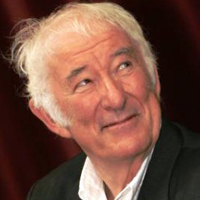
Seamus Heaney (1939-2013)
This poem putting brutality at the center links past and present, history and modern time then and now and there and here. What continue from ancient time to modern time are cruelty/ brutality and primitivism.
“Bog” in the poem serves as the central metaphor that is symbolic of the continuation of inhumanity, brutality, cruelty, and killing of innocent people throughout the human history. In the first, second, and third stanzas the poet using his sympathetic imagination describes the way the girl was punished on the charge of adultery. He creates the picture of a weak and fragile girl and seems to be suffering her pain and agonies. When the girl was punished, she was pulled her with a rope from her neck, she was made naked. The girl was trembling with cold, her whole body was shaking.
She was behaved as if she was not human and non-living. They used an old knife to share her head. Her eyes were blindfolded so that she could not see the world. Instead of a ring they gave her a noose. And finally she was buried alive. The stones, rods and boughs were used to cover the bog. In the fifth and seventh stanza the poet beautifies the dead body and attempts to create a mental picture of the girl, when she was alive. He compares ‘shaved head’ to ‘stubble of black corn”, the noose to a “ring” and he imagines a beautiful picture of the girl as flaxen (silky) haired and with a beautiful tar-black face. The poet shows his sorrow and pity to the girl by saying “My poor scapegoat” which indicates she alone is the victim of the so-called crime of adultery since her partner is not punished because he is male. She alone is punished for their so called criminal act, she became a scapegoat. In the sixth stanza the poet makes it clear that she was killed on the charge of adultery, but this adultery for doing “love” is not a crime. In the 8th stanza the poet shows his ambivalent attitude regarding his relation to that girl. On the one hand he claims to be in love with that girl but on the other hand he shows his helplessness that he could do nothing to save the girl. This stanza raises the serious question about the role of an artist in a situation in which innocents are victimized. For, Heaney this role is the role of a “voyeur” who can observe the scene from a distance only to draw it artistically.
In the last two stanzas of the poem, the poet repeats the same role of passive observer and links past and present. He compares the brutality of tribal men of the first century AD and brutality of the Irish Revolutionary Army. What he observes is that the perpetrators are different but the form of brutality is the same. In both past and present innocents are victimized for the crime. In Ireland Irish girls who married British soldiers were brutally killed by Irish Revolutionary Armies. The marriage between and Irish girl and British soldiers was viewed as an act of betraying Irish nationalism or Irish Revolution as suggested by the term “your betraying sisters”. The poet seems to be mocking the claim of modern men being civilized. Though there is a constant claim of civilization but the base of it is constituted by atrocity, brutality, inhumanity and cruelty. The poet is Irish, mostly he engages with Irish culture, tradition or the convention. Others celebrate it but he talks about it to point out its internal contradictions. He explores the dark sports of human history in Irish culture. He always relates the individual Irish culture to the general theme of humanity.
Cite this Page!
Sharma, Kedar N. "Punishment by Seamus Heaney: Summary and Critical Analysis." BachelorandMaster, 18 Nov. 2013, bachelorandmaster.com/britishandamericanpoetry/punishment.html.