The Whitsun Weddings by Philip Larkin: Summary and Analysis
The poem The Whitsun Weddings by Philip Larkin is about the poet's journey to London in a train. The day is a Whitsun Day on which the British Government frees marriage taxes for one day. Therefore the day fascinates people belonging to the lower economic class because they cannot afford the payment of marriage taxes on other days. The poem on the surface level is a description of these experiences of that particular day.
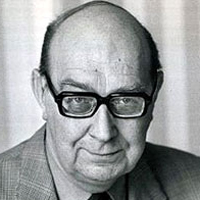
Philip Larkin (1922- 1985)
In the beginning the poet seems to be showing a kind of hatred for marriage or the newly married couples. Therefore, his description of physical appearances of those couples and their relatives is full of mockery. But towards the end of the poem, the poet realizes the importance of marriage. This time he realizes marriage to fertility (“the arrow shower” and “rain”) and thus to the continuity of the human race. The new knowledge contradicts his previous attitude towards marriage, it results in a kind of irony which affects the poet himself, therefore, the poem becomes self ironic.
In the first and the second stanza, the poet describes his past experiences when he was traveling in a train. These two stanzas are full of panoramic description of the scenes; that pass by as the train moves forward. The description shows that the poet is beginning his journey from the country area to a city that is London. The important moment in the poem comes when newly married couples board on the train. These newly married couples are accompanied by their relatives and they certainly belong to a lower economic class. The description of their physical experiences with the words and phrases like “pomaded girls”, parodies of fashion” suggest that they are from the lower economic class. In each station and platform the poet witnesses the flow of such newly married couples. The poet virtually being an unmarried man is full of disgust for marriage with the arrival of those people and the poet undergoes mystifying experiences of suffocation. He is put in an uneasy situation and starts mocking the appearances of those married couples and their relatives.
The poet after the description of the wedding couples and their relatives once again focuses on scenes outside landscape. The description can be contrasted to the description of the landscape. The turning point in the poem comes at the end shown by the lines “A sense of falling, like an arrow shower sent out of sight, somewhere becomes rain”. In these lines the poet expresses his realization of importance of marriage. The poem suddenly becomes ironic because his realization contradicts his previous attitude towards marriage. In these lines “arrow, showers” and “rain” relate marriage to fertility and to the continuity of life. Therefore the ultimate knowledge about marriage is finally achieved by the poet.
The phrase ‘a happy funeral’ and ‘a religious wounding’ in the poem are noteworthy. The poet treats a marriage as a happy funeral and as a religious wounding. The implication is that, although a marriage is a happy event, it carries within the seeds of the death of happiness which is bound to occur in the course of time. Similarly, the ceremony of marriage is described here as a religious wounding, meaning that the ceremony would subsequently turn out to be a painful affair. Thus, Larkin takes a cynical view of marriage. The happiness of marriage cannot last forever according to him.
Cite this Page!
Shrestha, Roma. "The Whitsun Weddings by Philip Larkin: Summary and Critical Analysis." BachelorandMaster, 16 Nov. 2013, bachelorandmaster.com/britishandamericanpoetry/whitsun-weddings.html.