Nature of illusion in The Glass Menagerie
Almost all the characters in the play resort to illusion as a defense against the harsh realities of life. An illusion is a faulty notion of happiness when life is surrounded by bitter and harsh facts. The play centers around the hopes, despairs, predicament and failure of Wing field family.
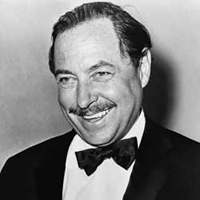
Tennessee Williams (1911-1983)
The Wingfields try to escape from reality to a world of fantasies, dreams and imagination to mitigate the pain resulting from a realization of failure and frustration of actual life. Temporary stay in the dream world is pleasant, but the return to reality if inevitable.
Amanda, the mother, finds that her son has not worked and earned enough. Her daughter is a cripple who suffers from inferiority complex. She has failed in the study and is very shy. This present reality is not satisfying in any way. Unable to face the bitter reality of present life she tries to live in her past when many gentlemen callers used to visit her. She tells the stories from her past and imposes her dreams and wishes on her children. But it is only an illusion. Laura has her own illusion too. A psychotic and a cripple with a great degree of shyness she has withdrawn into the world of artificial glass animals. The beauty of the glass menagerie fascinates her and helps forget the pain of real life. But the glass animals are fragile and breakable. It's also a glass of fragile dreams. The moment the glass animal is broken, she is awakened to the reality of life from which she was hiding herself. When Amanda comes to know that Jim will not marry her daughter the artificial world of dreams has broken down. She is enacting a drama to show the there are no tensions. She tries to hide behind the facade of illusion to conceal her sorrow and problems. She speaks in a very jovial manner in order to show that life is devoid of problems. She forces herself to be led by illusion. When the world of dreams breaks down, she remains a shattered woman. Tom has his own world of illusion as well. Being unable to have any worldly success he lives in the world of movies to escape from the realities of life. Though he is more independent and better able to withstand the assaults of his mother, he shuns responsibility and resorts to the illusion of cinema. His ultimate decision to leave his sister and mother behind and move to the sea provides him an escape. However, it is also an illusion because a sense of guilt will always haunt him that he has run away from the responsibilities of life.
The gap between appearance and reality helps us understand the nature of illusion in the play. Though escaping into the world of illusion is not a reliable solution, the people concerned have found a remedy for the sickness of life. As their stay in the world of illusion can help them to temporarily forget the aches and pains of life the illusion sounds pleasant. The playwright has succeeded in prompting us thinking along that line by dramatizing the conflict between reality and illusion. No matter how pleasant the world of illusion may be, one cannot, however turn ones back complacently on reality for long.
The Glass Menagerie Study Center
Dramatic Technique in The Glass Menagerie
Tom as a Representative of the 20th Century Man
Laura as a Romantic Superwoman in The Glass Menagerie
The Glass Menagerie Study Center
Introduction of The Glass Menagerie
Summary of The Glass Menagerie
Symbolism in The Glass Menagerie
Sublimating Animal Drives into Aesthetics
Style of Williams in The Glass Menagerie
Biography of Tennessee Williams
 |
bachelorandmaster.com |